

Joggers vs Sweatpants: Which One Should You Wear?
Joggers and sweatpants are defined by one core structural difference: joggers have tapered legs with fitted elastic ankle cuffs, while sweatpants have straight, baggy legs with open or loose hems. That single design choice changes everything about how each garment fits, performs, and looks in public. Joggers weigh 200–280 GSM in fabric weight, while sweatpants run heavier at 280–400+ GSM. That weight gap explains why one is built for movement and the other for maximum warmth. Knowing the difference between joggers and sweatpants saves you from wearing the wrong thing at the wrong time.
1. Joggers vs sweatpants: key design and fit differences
The most visible difference between the two is the leg shape. Joggers taper toward the ankle and close with a fitted elastic cuff, creating a clean, intentional silhouette. Sweatpants run straight from the hip to the hem, giving a relaxed, boxy look that prioritizes ease over structure.
Waistband construction also differs in a meaningful way. Jogger waistbands use internal drawcords engineered for active motion, which prevents slipping during high-intensity movement. Sweatpants use heavier, ruched waistbands with external drawcords designed for lounging comfort, not athletic performance.
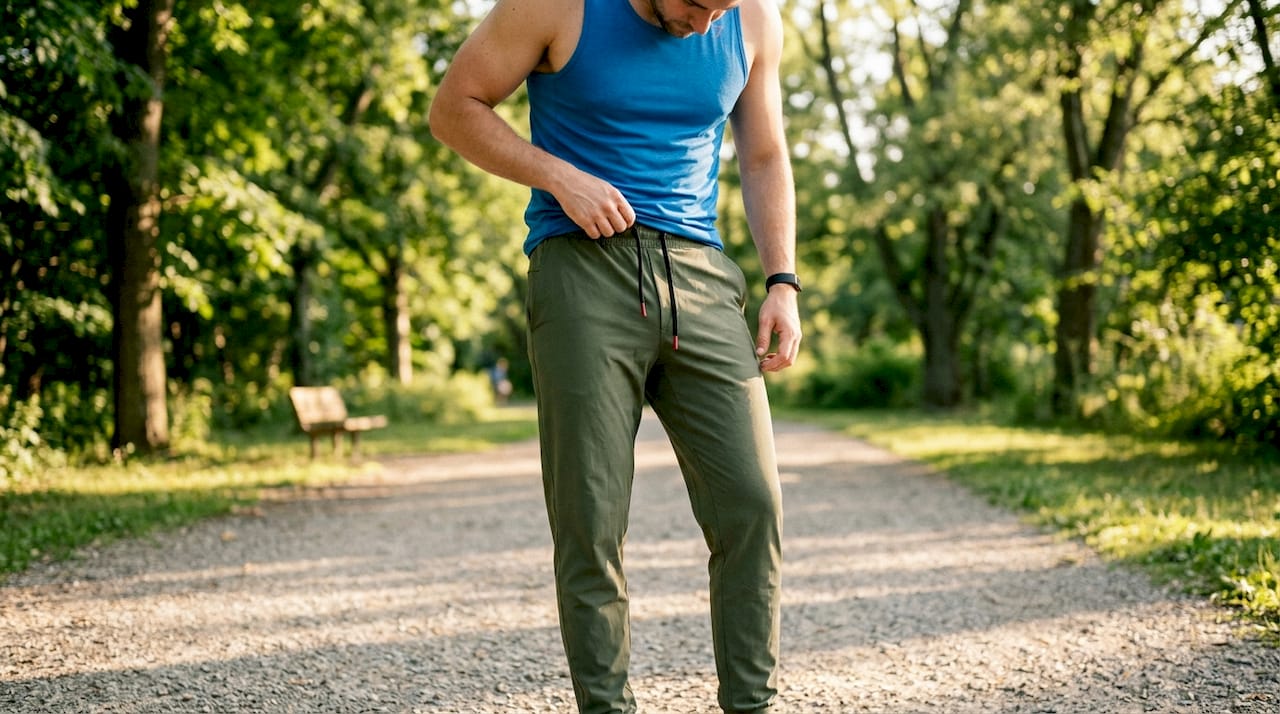
The ankle cuff on a jogger does something most people overlook. It frames your footwear intentionally, making sneakers or boots part of the outfit. Sweatpants cover the shoe more fully, which softens the overall look but removes that deliberate styling detail.
| Feature | Joggers | Sweatpants |
|---|---|---|
| Leg shape | Tapered, narrows to ankle | Straight, baggy |
| Hem style | Fitted elastic cuff | Open or loose hem |
| Waistband | Internal drawcord, active fit | External drawcord, ruched |
| Silhouette | Modern, form-fitting | Relaxed, comfort-first |
| Footwear visibility | Shows shoes intentionally | Covers shoes more fully |
2. Material and fabric differences that affect comfort and warmth
Fabric weight is the clearest way to separate these two garments. Joggers use lightweight, breathable blends, often polyester and spandex, that sit in the 200–280 GSM range. Sweatpants rely on heavier cotton fleece or French terry, pushing into the 280–400+ GSM range for insulation.
Performance fabrics in joggers include moisture-wicking, quick-dry, stretch, and anti-odor features. Those properties make joggers functional across a wide range of activities, from a morning run to a grocery run. Sweatpants focus on warmth and plush softness, with limited technical features beyond basic comfort.
Elastane content tells the durability story. Joggers typically incorporate more than 5% elastane for stretch recovery, which resists bagging over time. Sweatpants often contain less than 2% elastane, which leads to sagging and pilling after repeated washing.
| Fabric property | Joggers | Sweatpants |
|---|---|---|
| Fabric weight (GSM) | 200–280 | 280–400+ |
| Primary material | Polyester/spandex blends | Cotton fleece, French terry |
| Elastane content | More than 5% | Less than 2% |
| Moisture management | Wicking, quick-dry | Minimal |
| Warmth level | Moderate | High |
3. Styling versatility and when to wear each
The tapered leg of joggers creates a modern look that reads as intentional rather than accidental. That quality makes joggers appropriate for the gym, casual errands, outdoor gatherings, and even low-key social settings. Sweatpants, by contrast, signal pure comfort and read as classic loungewear in most public contexts.
Joggers bridge activewear and streetwear in a way sweatpants simply cannot. Pair joggers with a fitted hoodie and clean sneakers, and the outfit works at a coffee shop or a casual Friday at the office. Sweatpants with the same hoodie reads as a rest-day outfit, which is perfectly fine at home but limits your options outside.
Seasonal fit matters too. Joggers suit mild to warm weather because their lighter fabric breathes well. Sweatpants earn their place in cold Canadian winters, where heavyweight fleece traps body heat effectively and keeps you warm during recovery days or long evenings indoors.
- Joggers work well for: gym sessions, casual errands, traveling, outdoor meetups, mild weather
- Sweatpants work well for: home lounging, cold-weather insulation, recovery days, movie nights, maximum coziness
4. Use-case scenarios: when each option makes sense
Choosing between the two comes down to your environment and what you need from the garment. Joggers provide better mobility during exercise and avoid fabric bunching behind the knees, which makes them the clear choice for any physical activity. Sweatpants excel at maximum insulation and coziness, making them the right call for cold climates and recovery days.
Traveling is one area where joggers consistently outperform sweatpants. Their fitted cuff keeps fabric from dragging, they look presentable in airports and transit hubs, and their moisture-wicking properties handle long hours of sitting without discomfort. Sweatpants are harder to style on the go and tend to look disheveled after a few hours of wear.
For wardrobe planning, a recommended ratio is 2–3 joggers to 1–2 sweatpants. Joggers cover the majority of casual lifestyle situations, while sweatpants handle the specific cold-weather and home-comfort scenarios where nothing else competes.
- Choose joggers when: you need to move freely, you are going out in public, the weather is mild, or you want one piece that works for both exercise and errands
- Choose sweatpants when: you are staying home, the temperature drops significantly, you are recovering from a workout, or you want maximum softness without any structure
Pro Tip: Buy your joggers one size up if you plan to wear them for both workouts and lounging. The tapered cuff still keeps the silhouette clean, and you gain extra comfort without sacrificing the look.
5. Care, durability, and fit considerations
Fit precision matters far more with joggers than with sweatpants. Improper inseam length in joggers causes cuff bunching, which ruins the clean line the design is built around. Sweatpants are more forgiving of length variations because the open hem simply falls where it falls.
Joggers use tech fabrics like polyester and spandex blends that resist pilling and hold their shape wash after wash. Sweatpants made from thick cotton or brushed fleece are prone to pilling and gradual shape loss, especially at the knees and seat. That does not make sweatpants inferior, but it does mean they require gentler care to extend their life.
Washing tips that actually matter: turn joggers inside out before washing to protect the outer surface and any printed details. Wash sweatpants in cold water on a gentle cycle to slow down pilling and preserve the fleece texture. Avoid high-heat drying for both, since heat degrades elastane and causes shrinkage in cotton-heavy fabrics.
Pro Tip: Air-dry your sweatpants whenever possible. High-heat dryer cycles are the fastest way to accelerate pilling and shrink the waistband, which shortens the lifespan of an otherwise durable garment.
Key takeaways
Joggers suit active, public, and multi-purpose wear, while sweatpants deliver unmatched warmth and comfort for home use and cold weather.
| Point | Details |
|---|---|
| Design defines purpose | Tapered jogger cuffs signal movement and style; straight sweatpant hems signal rest and warmth. |
| Fabric weight drives function | Joggers at 200–280 GSM breathe and flex; sweatpants at 280–400+ GSM insulate and cushion. |
| Joggers cover more situations | A 2–3 jogger to 1–2 sweatpant ratio gives you the most wardrobe flexibility. |
| Fit precision matters more for joggers | Wrong inseam length causes cuff bunching; sweatpants tolerate length variation naturally. |
| Care habits extend lifespan | Cold-water washing and air-drying preserve both fabrics significantly longer than hot cycles. |
What I have learned from wearing both year-round
After spending years helping people find casual wear that actually fits their lifestyle, one pattern stands out. Most people own too many sweatpants and not enough joggers. Sweatpants feel like the safe, comfortable default, but they cover fewer situations than most people realize.
The real value of joggers is not that they look better. It is that they remove a decision. You can wear a good pair of joggers to the gym, then stop at the store, then meet a friend for lunch, without changing. Sweatpants rarely survive that sequence without looking out of place by the second stop.
Body type also plays a role that rarely gets discussed. Joggers with a tapered leg tend to work well across a wide range of builds because the cuff creates a defined endpoint that balances proportions. Sweatpants with a straight, wide leg can overwhelm a shorter frame or add visual bulk where you do not want it. Trying both cuts before committing to a style is always worth the effort.
My honest recommendation: build your casual wardrobe around joggers as the foundation, then add sweatpants specifically for cold-weather and home-comfort situations. That combination gives you style flexibility without sacrificing the cozy days you actually need.
— EhDeals
Casual wear worth adding to your wardrobe
Ehdealscanada carries a strong selection of casual and athletic bottoms at prices that make building a proper wardrobe easy. The Downtown Jogger is a standout pick for anyone who wants a tapered fit that moves from the gym to the street without missing a beat. It handles the full range of casual situations that joggers are built for.

For those who lean toward relaxed, cozy fits, the Casual 2-Piece Loungewear Set delivers coordinated comfort that makes sweatpant-style lounging feel put-together. Browse the full casual apparel collection at Ehdealscanada to find the right fit for your lifestyle and budget.
FAQ
What is the main difference between joggers and sweatpants?
Joggers have tapered legs with fitted elastic ankle cuffs, while sweatpants have straight, baggy legs with open or loose hems. That structural difference determines their silhouette, performance, and appropriate occasions.
Are joggers or sweatpants better for working out?
Joggers are better for workouts. Their technical fabric blends provide moisture-wicking, stretch, and anti-odor properties, and their tapered fit prevents fabric from bunching behind the knees during movement.
Which is warmer, joggers or sweatpants?
Sweatpants are warmer. Their heavyweight cotton fleece or French terry fabric sits in the 280–400+ GSM range, which traps body heat far more effectively than the lighter blends used in joggers.
Can you wear joggers in public and sweatpants cannot?
Joggers work well in public settings because their tapered silhouette reads as intentional and modern. Sweatpants are better suited to home and recovery settings, where comfort matters more than appearance.
How many of each should you own?
A ratio of 2–3 joggers to 1–2 sweatpants covers most casual lifestyle situations. Joggers handle the majority of everyday scenarios, while sweatpants fill the specific cold-weather and home-comfort role where they genuinely excel.